Admin
Insights Dashboard
Total Posts
14
Visible
14
Hidden
0
Categories
7
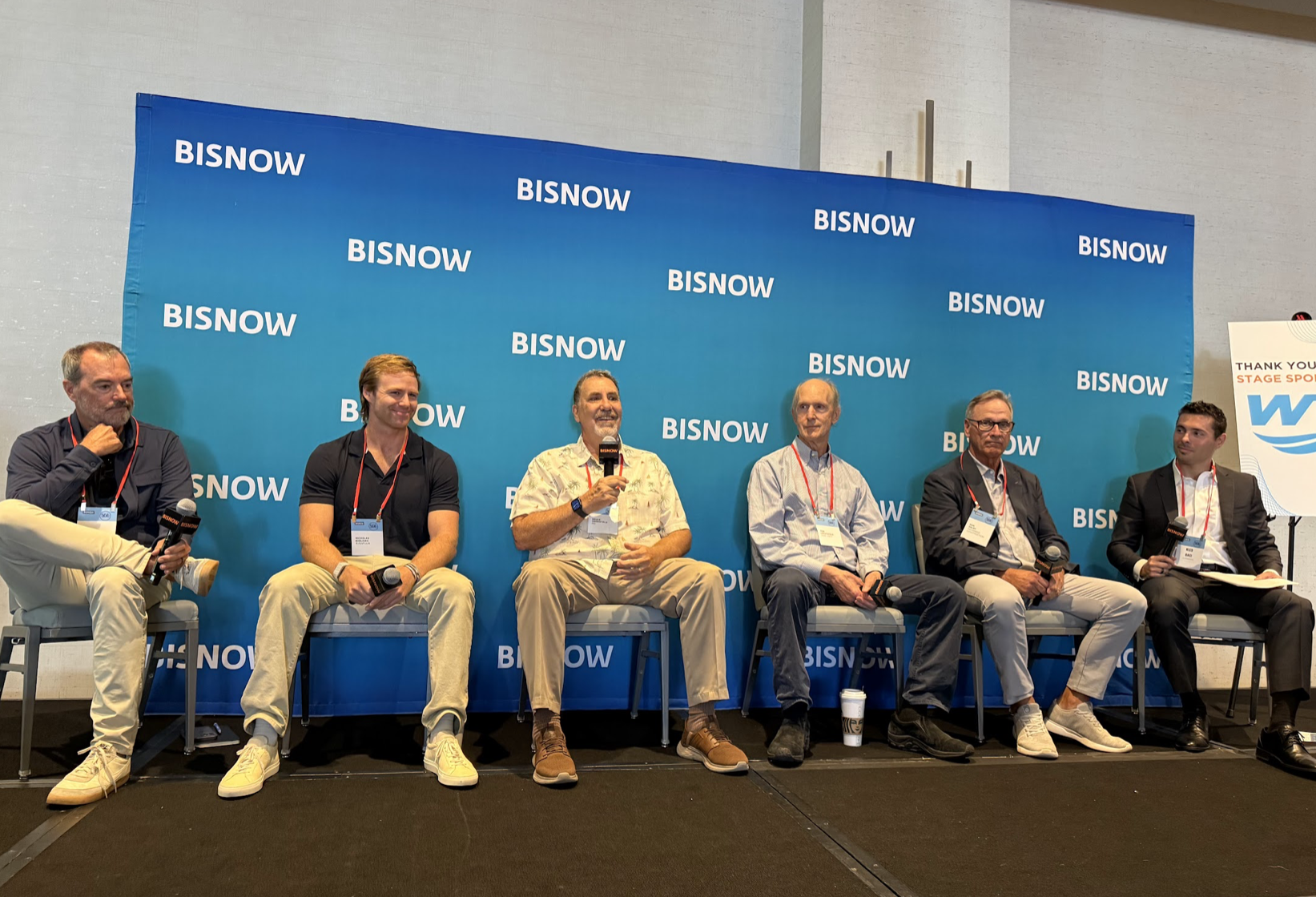
Why Surf Parks Are Becoming a Major Leisure Asset Class
ExternalBisnow
Surf parks are moving beyond standalone attractions and becoming credible anchors for mixed-use leisure, hospitality and residential destinations. Proven technology and a growing development pipeline are giving investors a clearer view of their potential. We believe the strongest projects will be designed as destination businesses, not simply wave pools. The investment case depends on market, technology, development discipline, operating model and repeat visitation across surfing, hospitality, wellness, F&B, events and accommodation. A great wave attracts attention; creating a commercially sustainable destination requires much more.

The Five Mistakes Leisure Operators Make in Year One
ExternalMcKinsey & Company
Opening creates a natural sugar rush—strong interest, motivated teams and customers keen to try something new. The real test starts when the honeymoon period ends. From our experience, five issues matter most: underestimating the effort required to sustain momentum after launch; limited management reporting to support fast decisions; being too nervous to make necessary changes when the original plan is not working; losing focus on what the customer is actually telling you; and failing to establish clear accountability and a disciplined operating rhythm. Year one should be treated as a period of constant learning and adjustment. The businesses that perform best are prepared to listen, challenge assumptions and change quickly.

Feasibility Studies: What Investors Actually Want to See
ExternalKPMG
A feasibility study is only as credible as the assumptions behind it. The weakest studies explain why a project should succeed; the strongest demonstrate that the development team understands how it could fail. Investors need to understand the assumptions beneath attendance, pricing, utilisation, seasonality, labour, operating costs, capital requirements and ramp-up. For emerging leisure concepts, technology, construction risk and management capability matter as much as market size. We believe the most useful question is often: what needs to be true for this investment to work? Then pressure-test every answer before capital is committed.

When a Leisure Business Underperforms: A Transformation Playbook
ExternalHarvard Business Review
When a leisure or consumer business underperforms, management often attacks the most visible symptom: cut costs, increase marketing or change structure. Sustainable transformation starts by understanding where value is actually being lost. Is demand weaker than expected? Is pricing wrong? Are operations inefficient? Is the proposition failing to generate repeat customers? Strong transformation combines immediate performance actions with deeper change across strategy, operations, people, systems and customer experience. Cost reduction can buy time. Real transformation creates a stronger business—and requires leadership to change how the organisation actually operates.

Why Active & Experience-Led Leisure Is Reshaping Destinations
ExternalMcKinsey & Company
The traditional destination model centred on accommodation, retail and F&B. Increasingly, the experience itself is becoming a reason to travel. Surfing, snow, wellness, adventure and participation-led leisure can create engagement that conventional amenities struggle to replicate. Strong experience anchors can drive accommodation demand, F&B spend, events, memberships, repeat visitation and value across surrounding development. But there is an important difference between an attraction people visit once and an experience they want to repeat. For us, repeatability is one of the defining characteristics of the next generation of leisure assets.

From Vision to Delivery: Managing Complex Leisure Developments
ExternalMcKinsey & Company
Complex leisure developments bring together property, construction, specialist technology, hospitality, customer experience and operations—often involving teams that have never worked together before. The biggest risks frequently emerge at the interfaces between those disciplines. Our experience reinforces the importance of early operator involvement, clear governance, active risk management and integrated decision-making. Choices made during design can permanently affect labour, capacity, customer flow, safety, revenue and operating efficiency. Fixing them after construction is invariably harder and more expensive. The objective should never be simply to build the asset—it is to build a business capable of operating successfully from day one.

The Operator Belongs in the Design Room
ExternalMcKinsey & Company
Too often, the people who will ultimately operate a business are introduced after the major design decisions have already been made. We believe operators should be involved from the beginning. Decisions around layout, capacity, customer flow, systems, staffing, safety and revenue opportunities can have permanent implications for operating cost and commercial performance. A design may look great on paper but still be inefficient or difficult to operate. Early operational involvement helps identify risks, challenge assumptions and ensure the asset is being designed not simply to be built—but to perform successfully once the doors open.

Beyond Ticket Sales: Building the Revenue Stack of a Modern Leisure Destination
ExternalMcKinsey & Company
The strongest leisure businesses rarely rely on a single revenue stream. The core experience attracts the customer, but the broader commercial model determines how much value the business ultimately creates. Memberships, F&B, retail, events, partnerships, accommodation, coaching and premium experiences can all strengthen revenue and customer engagement. The key is not simply adding more products—it is understanding which offers complement the core proposition and improve customer lifetime value. From our experience, this thinking needs to start during feasibility and design, because the physical asset, operating model and customer journey ultimately determine which revenue opportunities can realistically be captured.

Growth Is Not the Same as Value Creation
ExternalMcKinsey & Company
Revenue growth can look impressive while masking declining margins, poor channel economics or increasing complexity. In consumer and FMCG businesses, the quality of growth matters as much as the headline number. We believe leadership teams need to understand where growth is coming from, what it costs to generate and whether it is improving the underlying economics of the business. Pricing, product mix, channel strategy, customer profitability and operating efficiency all matter. Sustainable value creation comes when revenue growth and margin improvement work together—not when additional volume is being purchased through discounting, excessive investment or complexity that the organisation cannot economically support.

The Customer Is Everyone's Job
ExternalMcKinsey & Company
Customer experience is often treated as the responsibility of marketing or a dedicated CX team. We think that misses the point. The customer experiences the entire business: the product, price, website, booking process, store, operations, frontline team, service recovery and everything in between. A great marketing campaign cannot compensate for a poor operational experience. Customer-led organisations therefore need functions to work across traditional boundaries, using customer insight to shape decisions throughout the business. The strongest organisations make customer experience part of their operating model and management culture—not simply another metric that gets reported at the monthly meeting.

Scaling a Business Changes the Business
ExternalMcKinsey & Company
What works when a company has 20 people rarely works when it has 200. Growth creates complexity, and the organisation needs to evolve with it. As businesses scale, informal communication and individual heroics need to give way to clearer structures, stronger systems, better management information and defined accountability. Leadership also changes: the people who were exceptional at building the early business may need new capabilities as teams, locations and decision-making layers multiply. The challenge is introducing enough discipline to support scale without destroying the entrepreneurial energy that created the opportunity in the first place. Scaling isn't simply doing more—it means building a different organisation.

Different Businesses Need Different CEOs at Different Stages
ExternalHarvard Business Review
The skills required to start a business are not necessarily the same skills required to scale, transform or optimise it. Some CEOs excel at creating structure from ambiguity. Others are strongest at growth, operational discipline, transformation or managing mature organisations. As the business changes, boards should continually ask whether the leadership capability matches the next chapter—not simply whether the incumbent has been successful in the last one. This doesn't mean leadership needs to change every few years. It means recognising that CEO effectiveness is contextual, and that successful leaders must either evolve with the organisation or ultimately make way for someone whose strengths better match what comes next.

Feasibility Studies: What Investors Actually Want to See
A feasibility study is only as good as the assumptions behind it. Yet most studies we review in the active leisure space are built on optimistic occupancy projections, undercosted operating models, and benchmarks drawn from incomparable markets. Here's what institutional investors and lenders are actually scrutinising — and how to make your feasibility study stand up to serious due diligence.

From Vision to Delivery: Managing Complex Leisure Developments
Large-scale leisure projects involve a complexity of stakeholders, contractors, planning requirements, and commercial pressures that most development teams are not fully prepared for. Without robust project oversight, timelines slip, budgets blow out, and openings are compromised. This insight covers how we structure development oversight engagements and what governance frameworks we put in place to keep projects on track from concept through to handover.